Good fit
Clients who have medical guidance and want coaching that respects it.
 Verve
Verve
Clinician-cleared strength and confidence
Private, careful strength training for DC-area clients who have already been evaluated by a physician, surgeon, or physical therapist and need a grounded bridge from rehab exercises back toward strength, work travel, court sports, and everyday confidence.
Rosslyn, Arlington, Georgetown, Foggy Bottom, Bethesda, Chevy Chase, McLean, Navy Yard, and Boyds
Local fit
An ACL tear changes how people trust their leg. Even after the medical plan is clear and formal rehab is underway, a lot of daily questions remain. Can I train around business travel? How do I rebuild strength without rushing? What should a workout look like when I am cleared for more but still not ready for chaos?
Verve's answer is simple: start with the clinical boundaries, then build a training plan that respects the person in front of us. For a Rosslyn professional, that may mean two private strength sessions around meetings at 1621 N. Kent Street. For a Georgetown or Foggy Bottom client, it may mean quiet training around work, family, or hotel logistics. For a Montgomery County athlete, it may mean a later bridge toward court movement near TennisPlex in Boyds once the medical team has cleared that step.
At a glance
Clients who have medical guidance and want coaching that respects it.
Rosslyn, DC, Bethesda, Chevy Chase, McLean, and Boyds schedules.
Strength, single-leg control, mobility, trunk stability, balance, and confidence.
Verve does not diagnose, treat, or clear return to sport. Your clinician leads that decision.
The
The first conversation is practical. What did the physician or physical therapist say? Was there surgery? What activities are currently allowed? What still causes swelling, instability, soreness, or fear? What does the client actually need to get back to: commuting from Arlington, walking hills near Georgetown, weekend pickleball, skiing next winter, school sports, or just feeling steady on stairs?
That clarity keeps the training grounded. In May 2026 and heading into summer 2026, a lot of clients are trying to plan vacations, camps, tennis ladders, golf rounds, or return-to-office routines. The temptation is to jump from rehab movements to normal workouts too fast. Verve slows that down in a constructive way: build capacity, check response, progress only when the body and the medical plan agree.
What
For a cleared client, the early work may include controlled strength patterns, tempo squats to a safe range, split-stance work, hip and trunk control, hamstring and calf strength, step-down mechanics, carries, and balance drills. The goal is not to make the session look flashy. The goal is to help the client understand what strong, stable, and repeatable movement feels like again.
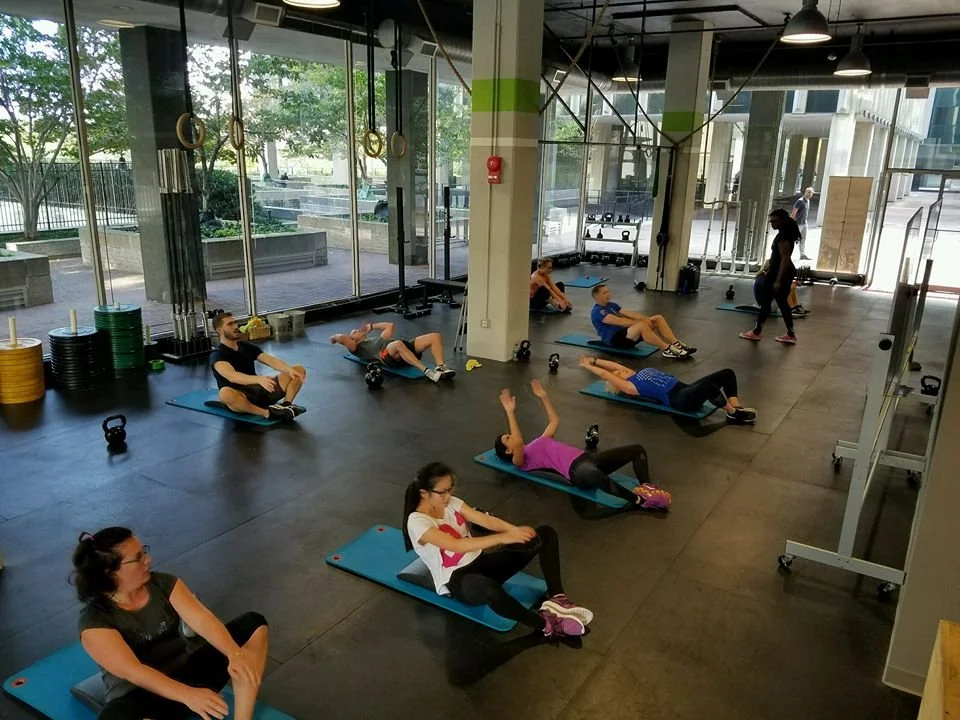
As June 2026 training blocks open up, the plan can be adjusted around symptoms and schedule. A client with a dense travel week may use a shorter strength circuit and more recovery work. A client with more time at the Rosslyn studio may build a fuller lower-body session. A DC client moving between Georgetown and Southwest may need an efficient plan that travels well without depending on one perfect setup.
How
Local details matter because consistency is usually the missing piece after rehab. An Arlington client might train before a Metro commute or after a day near the Rosslyn business corridor. A Foggy Bottom or Georgetown client might need sessions that do not leave them wrecked before an evening event or a long walk through campus and hotel corridors. A Bethesda or Chevy Chase client may need a plan that fits around family driving, school schedules, and weekend court reservations.
For clients who eventually return to tennis, pickleball, soccer, skiing, or running, the local plan can also change by venue. Later-stage court movement near Boyds should not look like early strength work in Rosslyn. Direction changes, deceleration, and low-ball reach patterns belong later, only when the client has clearance and enough strength to handle them.
A
Week one is intake and guardrails: review restrictions, set a training baseline, choose two or three movements that build trust, and decide how soreness will be handled. Week two adds structure: one lower-body strength session, one trunk and mobility session, and a short at-home movement routine that does not compete with rehab. Week three starts to look at confidence under light fatigue.
By weeks four to six, if the client is responding well and the clinician's plan allows it, the program may add more demanding strength work, low-risk balance challenges, and conditioning that does not create next-day irritation. The point is not to promise a timeline. The point is to give the client a calm, measurable path through the next few weeks.
What
Clients are often relieved that a good plan does not have to be extreme. They do not need to prove toughness in the first session. They need a coach who watches details, asks the right questions, scales the day honestly, and communicates clearly. That is especially true for busy professionals who are already managing meetings, family obligations, and the mental load of an injury.
The tone is optimistic because returning to training can be a positive process. It can feel good to rebuild strength and trust. It can feel good to see stairs, travel days, and controlled workouts get easier. But optimism works best when it is tied to specifics, and that is where Verve's private coaching model is strongest.
Training rhythm
Review goals, medical restrictions, location, and training history.
Build controlled squats, hinges, split-stance patterns, carries, and trunk control.
Add safe single-leg control, balance, and fatigue management.
Coordinate any running, jumping, or court movement with clinical clearance.
Client notes
The plan gave me a way to keep training without pretending my knee was ready for everything.
Arlington professional
I liked that the sessions were specific, calm, and realistic around work travel.
DC client
The later-stage work helped me understand what I still needed before feeling confident on court again.
Court-sport client
Questions
Possibly, but only after medical evaluation and only inside the boundaries your clinician provides.
No. Physical therapy and medical care lead the clinical side. Verve supports strength, movement quality, and training consistency when appropriate.
Common service geography includes Rosslyn, Arlington, Georgetown, Foggy Bottom, Bethesda, Chevy Chase, McLean, Navy Yard, and Boyds.
The plan can include short travel sessions, recovery work, and simple strength blocks so a trip does not erase momentum.
It can support the preparation process, but return timing and sport clearance should come from your physician or physical therapist.